PORK BINAGOONGAN


Tita Becky
•
October 14, 2025
Pork Binagoongan might make a first-time Westerner do a double take the moment the bagoong hits the air, and honestly, that's part of the adventure. Bagoong has a bold, funky aroma that doesn't exactly whisper "eat me," but don't let the smell fool you. Much like blue cheese, anchovies, or a well-aged French cheese, some of the world's most beloved foods are a little intimidating before they become irresistible. Once simmered into tender pork, bagoong transforms into a rich, savory, umami-packed sauce that's salty, complex, and very addictive. One bite in, and you'll understand why Filipinos keep coming back for more.
WHAT IS BANGOONG?
is a traditional fermented condiment made from either small shrimp or fish mixed with salt and aged for weeks to months. It's a staple in Filipino cooking.
THERE ARE 2 MAIN TYPES:
Bagoong Alamang – Made from tiny shrimp or krill. It can be sold fresh, fermented, or sautéed with garlic, onions, sugar, and spices that comes in a sealed bottle bought from the grocery store. This is the type most commonly used in dishes like Pork Binagoongan.
Bagoong Isda – Made from fermented fish, with regional variations throughout the Philippines.
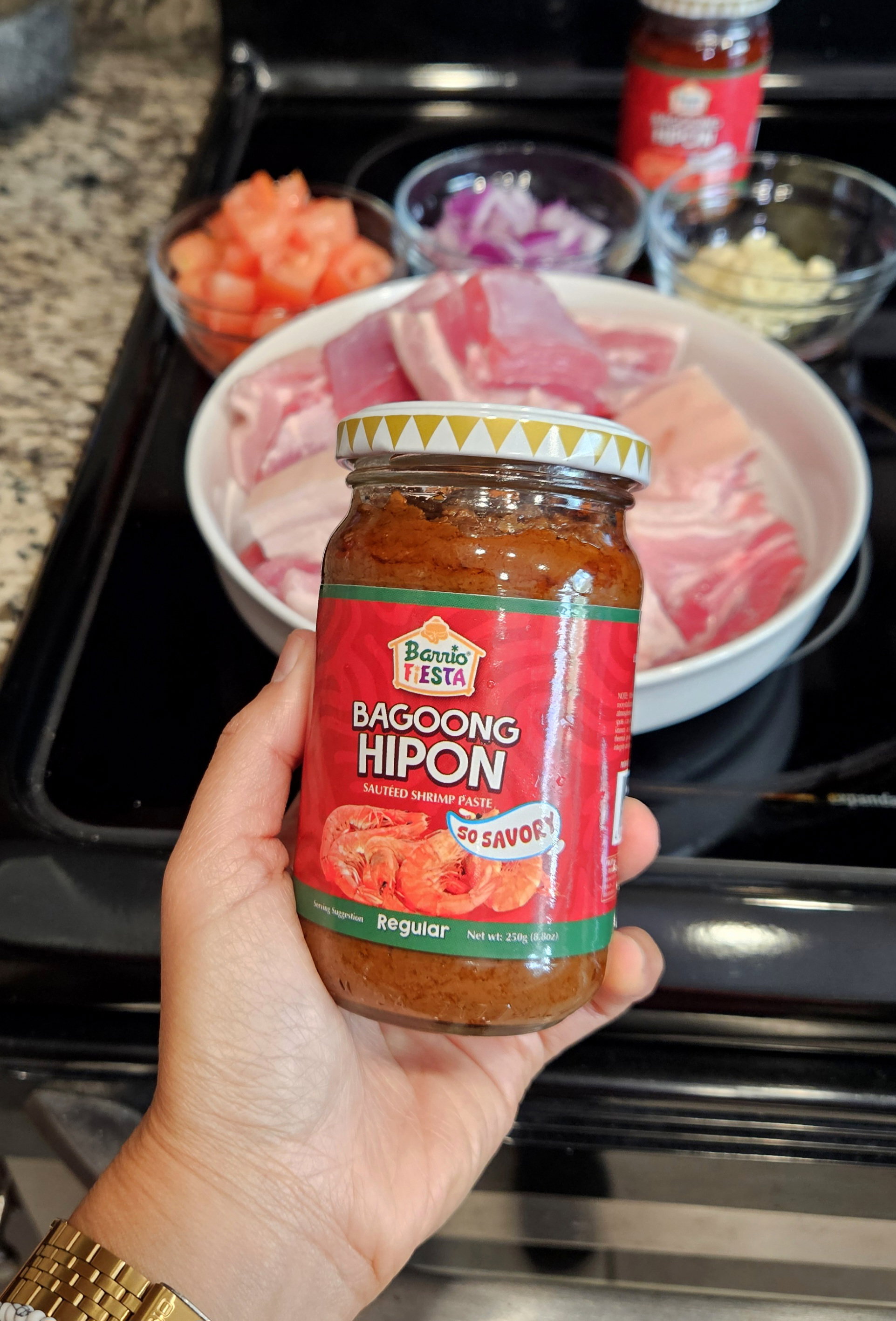
This is the exact bagoong I used for this recipe. It's Bagoong Hipon by Barrio Fiesta (not sponsored). It's made of whole shrimp instead of krill. It's already "ginisa" or sauteed in aromatics and seasonings. You can purchase it at your local Asian supermarkets.
PROCEDURE
This dish may look intimidating to make, but it’s actually quite easy; you just need a little patience. Start by rendering the fat from the pork belly and allow it to brown in its own fat. Once the pork is nicely browned, add the aromatics and bagoong, then sauté until fragrant. Pour in the water and let everything simmer until the meat is soft and tender and the broth has reduced. Finally, taste and adjust the seasoning as needed with salt, fish sauce, or black pepper.
See? Easy, right? Just let time do most of the work.
6 servings
Ingredients (9)
Ingredients (9)
Instructions
On a preheated wok or pan over medium-high heat without oil, add pork belly chunks (2 ½–3 lb), let the fat render, and brown the meat on its fat. This step took about 15-20 minutes.
If you're using a leaner cut of pork belly, add 1/2 cup of water to get it going.
Once pork belly is browned, add garlic (4 cloves) and onions (½ small) and saute until fragrant.
Add tomatoes (1 large) and bagoong (2 Tbsp) saute for a few minutes or until the tomato softens.
Add water (1 ½ cups), cover, and bring to a boil then reduce heat to low and simmer until the water has reduced by half and the meat is soft and tender.
This process took about one hour.
Taste to see if needs salt (to taste) or fish sauce (to taste) and pepper are needed.
The bagoong is already salty and has so much flavor that I felt like I didn't need to season the broth.
Notes
Notes
- I used store-bought sautéed Bagoong in a jar. You can easily find it at any Asian supermarket. It’s already cooked in spices, salt, and sugar. It’s very salty and flavorful, so I didn’t add any more salt. But feel free to add salt or fish sauce if needed.
- You can also add red or green chilis for heat.
- You can also use pork shoulder sliced into thick chunks
- Adjust bagoong and fish sauce to your liking. 2 heaping tbsp is perfect for me, but add more if you want more saltiness.
- You can also add vegetables like Chinese eggplant.
Subscribe to get my new recipes delivered to your inbox
Comments
Sign in to comment